Eco Savings

Global Reach
Marinpart connects sellers and buyers worldwide, making used marine parts accessible across oceans.
Easy Listing
Sellers can quickly post parts with ID masking, keeping details secure while reaching many buyers.

Cost Cuts
Shipping companies save significantly by sourcing quality used parts, reducing downtime and expenses.

Green Impact
By reusing parts, Marinpart helps cut waste and lowers the environmental footprint of shipping and offshore industry.
Improvement of Industry Value Chain & Law Enforcement
The size of the global commercial fleet is 100.000+ vessels.
Marine traffic amount to 3% of global 40+ bn tons of CO2 emission. In addition comes another 15+ bn tons of CO2 equivalent emission (other greenhouse gases methane, nitrous oxide, etc.). Based on average price quota of 30$ per 1 ton CO2; the global shipping industry stands for $50bn of yearly cost of pollution.
The shiping industry tries to lower this by:
- New, more efficient and safe ships. Estimate of 2% improvement per year.
- Scrubbers (Exhaust gas cleaning systems. While they can lower sulfur dioxide emissions, they also discharge contaminated washwater into the ocean, which can harm marine life and contribute to ocean acidification, making their “green” effect questionable. Scrubbers can reduce sulfur dioxide emissions by about 30% compared to ships using low-sulfur marine gas oil, but they may actually result in a 1% increase in CO2 emissions due to the extra fuel consumption required to operate them. Therefore, while they help with certain pollutants, their overall impact on CO2 reduction is not beneficial.) Estimate of 2% improvement per year.
- Route, time and speed planning. Estimate of 1% improvement per year.
- Greener fuel. Minimal effect per now
- Shore power. Effect locally, minimally globally.
- CO2 capturing. Minimal per now, but potential.
- Regulatory pressure (EU ETS, IMO rules). EU now requires ships to pay for CO2 emissions (EU ETS). IMO is enforcing Carbon Intensity Indicator (CII) rules. These make efficiency improvements financially necessary.
Shipping companies and lobby works against point 7). Marinpart will work towards pairing compliance of point 7) with more reuse of shipping parts and more effective repairs (of preferable only part and not whole system which part is embedded in, especially electronics where part/HW is bundled with system and/or SW). The documentation of reuse (sale and purchase) can be seen together with new regulatory laws. This is especially important when we consider WASTE of functional parts AND the sale of an amount of this to SANCTIONED FLEET of approx 1.000 ships (approx 10% of their vessel type on global). The socumentation of sales will also ensure compliance with export laws – which are strongly overridden.
The direct improvement coming from a marketplace of used parts, can also have effect for point 3). An indirect impact can be expected for the deeper value chain including vendors and producers of parts. As recycling effects pulse backwards in the value chain, also the earliest players in the chain reorientate their effiency towards true system efficiency and lowest pollution. Within 5-10 years, the effect of a marketplace for used shipping and offshore parts can constituted 10-20% of the reduce in pollution & industry value improvements. That amount to an impact of $5-10bn – where roughly half of it runs as new over-the-counter, effective green revenue streams from sales of used parts.
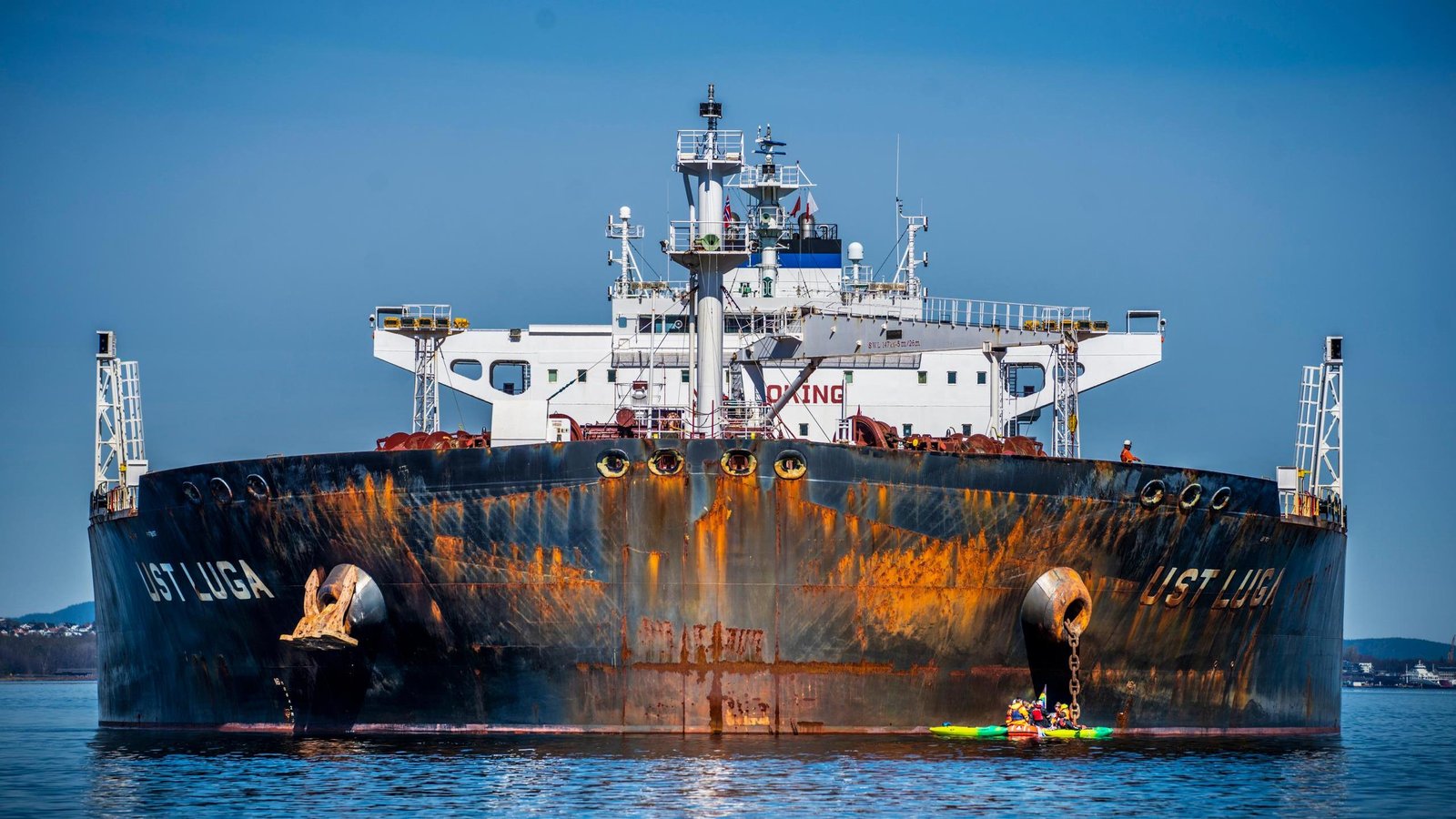
Greenpeace action against the ship Ust Luga unloading oil on Åsgårdstrand, Norway.
Foto: Ole Berg-Rusten / NTB



About Us
Marinpart connects shipowners globally with trusted used marine and offshore parts, saving costs and reducing waste. Parts may be closer than you think. Try it – don`t miss the chance.